book review

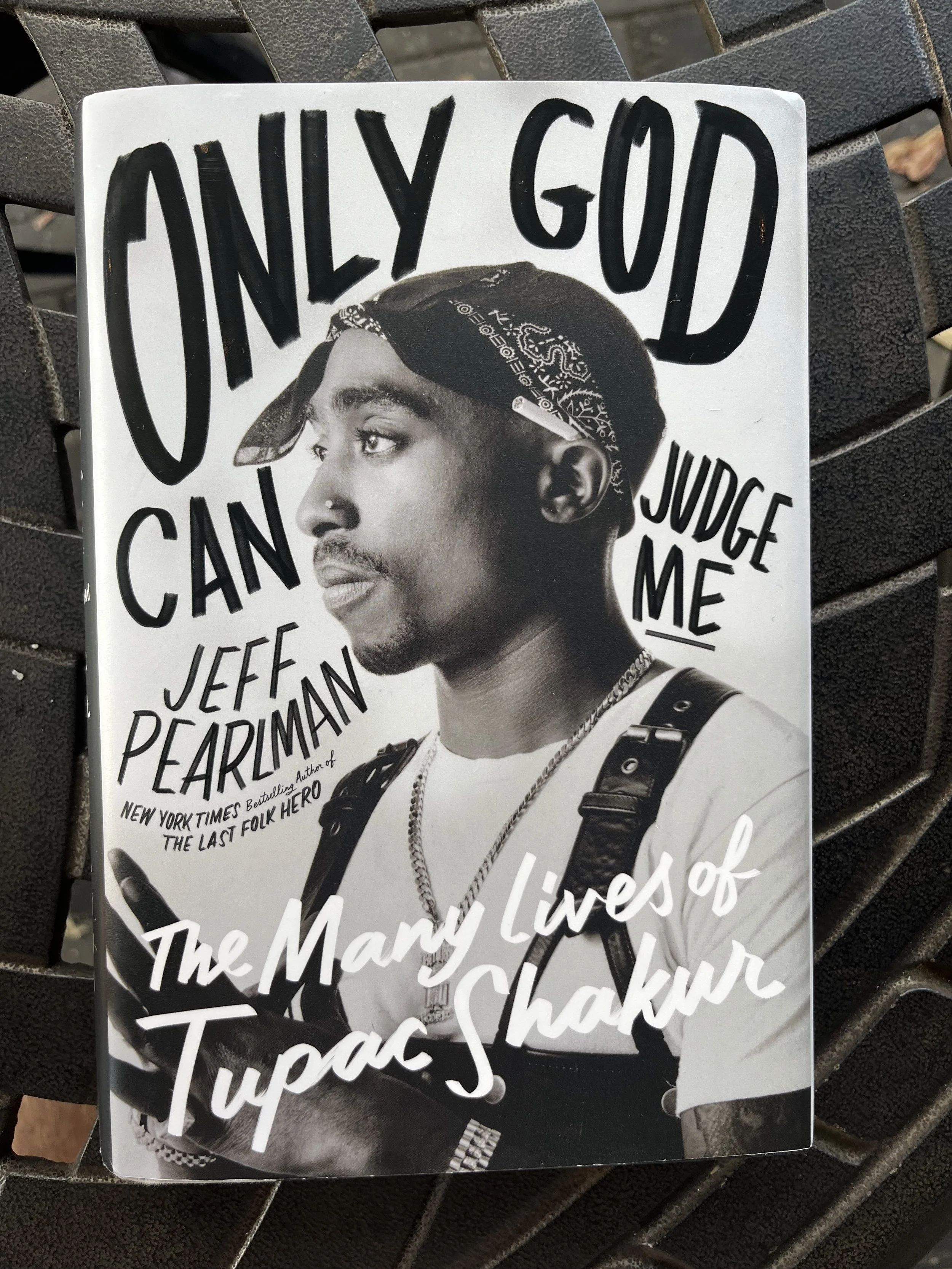
Book Review | Only God Can Judge Me: The Many Lives of Tupac Shakur by Jeff Pearlman

My lifelong love of reading comes from a few places. My mother was a school teacher and I am fortunate that she started teaching me to read before I even set foot in a school house. My father always read the local paper. He would pull out the comics (funnies we called them) and later the sports section for me. It was part of our morning routine from as far back as early elementary school. 

Around the time I started middle school, dad bought me a subscription to Sports Illustrated - probably to peruse the annual swimsuit edition as much as nurture my love of reading, but who’s counting at this point? I loved reading about my favorite athletes, getting to know more about what made them tick and trying to mine lessons for my own athletic dreams.

Sports and music were my two loves growing up. In addition to reading everything I could get my hands on, I have always been a voracious consumer of music. Hip hop was king in my teenage years. My buddies and I would pass around the latest Outkast, Beastie Boys, Wu-Tang Clan, Nas, and of course, Tupac CDs. We all had tricked out sound systems in our lifted pickup trucks. Middle class white guys thinking of themselves as ghetto cowboys.

Jeff Pearlman’s work was among those articles I devoured in Sports Illustrated. I didn’t know the name Jeff Pearlman, but like anyone who was following baseball in the late 1990s and early 2000s, I sure knew his John Rocker story. Rocker was a brash, flame throwing reliever for the Atlanta Braves. Rocker was also, as Pearlman would discover over the course of writing his now famous profile of the pitcher, a bigot.

At the time, I was navigating my own relationship with race, class, gender, and sexuality as a cisgender, heterosexual white guy in a town that favored people who looked and felt like me. Looking back, I credit my love of reading and my exposure to hip hop with helping me understand systemic racism and inequality.

Rocker was not saying anything different from any number of people in my life; but there was something shocking about someone with his profile uttering such nonsense. It’s one thing if your uncle is complaining about the (insert racial slur) bagging his groceries. A famous athlete on the largest stage in baseball saying such things provides a different lens through which to process the status quo.

The world I am talking about was decidedly conservative. The Telecommunications Act of 1996* was leading to the rise of Rush Limbaugh and others. Flag-waving, nationalistic, watered down country music was beginning to take over local radio stations. The media landscape was changing in profound ways.

An under-discussed consequence of the slow burn of facism culminating with Donald Trump as dictator of the United States is how long journalists have been vilified in this country. Trump is a cartoonishly extreme example of the point I am making, but demonizing the press is not new. And, I get it. Journalists shed light on inconvenient facts. They humanize heroes and expose false idols. In short, good journalists should be considered heroes themselves but they often are treated as enemies by those in power. 

Which brings me to Only God Can Judge Me: The Many Lives of Tupac Shakur by Jeff Pearlman. Rarely, if ever, has a book sat so squarely at the intersection of my interests. A book about one of the most influential musical artists of my lifetime written by an accomplished sportswriter. Pearlman is able to take the icon that is Tupac and distill his complicated, brief life into equal parts inspiring, devastating, and human. 

The guy who had an impossible rise to superstardom is here in these pages. The one whose sexual prowess was the stuff of legend. The one whose lyrics were biting and beautiful and poetic.  

But also, the pretend gangster. The young man pining for a father. The misogynist philanderer. The one convicted of sexual assault.

Pearlman does not gloss over the shitty parts about Tupac. His legacy is complicated and we can celebrate the genius while acknowledging his more problematic traits and actions.

Pearlman employs years of honing his journalistic chops and a deep appreciation for the subject matter to craft an all time great biography. The urgency one senses from Jeff Pearlman as he tells gripping stories through videos on TikTok or Instagram consumes these pages. This book begged me to pick it up and continue and left me wanting more.


*For an excellent explanation of the Telecom Act of 1996, I highly recommend Marissa R. Moss’s outstanding book Her Country. Also, check out Marissa’s appearance on my podcast The Marinade.

Review Under Two: The 1619 Project

Review Under Two is a segment of The Marinade with Jason Earle podcast where host Jason Earle reviews an artistic work he finds inspiring in under two minutes.

Our Review Under Two for Episode 103 with musician and author Allison Russell focuses on The 1619 Project book.

The forever challenge of writing about race in America is finding a way to take on heavy conversations while also keeping the pages turning as the intellectual wheels are spinning and the emergency break is out of reach. 

It should not be a difficult ask for folks to buckle down and do the heavy lifting of reading truth about the painful history of race in America, but here we are. More than just a tough ask, the very suggestion that we call for people to learn facts has become a political wedge familiar to the most terrifying dystopian nightmares.

In 2021, 19 states passed laws restricting voting in America. These are rules aimed at disenfranchising Black Americans. Florida went so far as to pass a law that makes it a felony to protest in favor of Black rights. A law that codifies immunity for atrocities like our nation’s dark day in Charlottesville, 2017. The act of teaching The 1619 Project is within a hair’s breadth of bringing civil liability on the heads of school districts in The Sunshine State.

None of these statutes use language so strong as saying “Black people are not allowed to congregate and petition their government.” None of them at this point have been so audacious as to dip into the language that was codified under The Slave Codes or The Black Codes. But their intent is clear and that’s why The 1619 Project is essential reading.

My father used to say, “If it ain’t broke, don’t fix it.” The integrity of the electoral count ain’t broke, but folks all across the country want to…’fix it.’ To fix the fact that Black folks are inspired to vote. To fix the fact that a Black man was elected president of the United States of America, a place where until 1965 Black folks did not even have the legally protected right to make such a decision. 

To “fix” the idea that a black woman like The 1619 Project’s architect Nikole Hannah Jones could grow up in Iowa, earn degrees from Notre Dame and the University of North Carolina, and go on put white supremacy in its place by daring to ask each of us that we deal honestly with our history.

Our history in a place that spent centuries enslaving humans, followed by Jim Crow, barely bridged by a handful of years of advances under Reconstruction.

You know most if not all of this. Some of you know it all-too-well having experienced the consequences of our collective past impact your own lives.

Nothing I have read has expressed those consequences in a way that is digestible by so many like The 1619 Project
Whether your life’s education has included a deep understanding of the history and impact of slavery on this country, or you grew up in a place where things were the way they were, The 1619 Project offers a clear examination of our history and a call to action. Nothing about that should threaten any of us. If it does, challenge yourself to read the book, or read it a second time, or a third; however long it takes for the truth to seep in and set us all free.

Review Under Two: Where the Devil Don't Stay by Stephen Deusner

Review Under Two is a segment of The Marinade with Jason Earle podcast where host Jason Earle reviews a work he finds inspiring in under two minutes.

Our Review Under Two for Episode 99 with singer-songwriter Jeremie Albino focuses on Stephen Deusner’s excellent book about the band Drive-by Truckers.

The Drive-by Truckers are one of the great American rock bands. Not a household name like Tom Petty and the Heartbreakers or Bruce Springsteen and the E Street band, but every bit as important and influential. To tell the story of such a band is to tackle a powerful and fascinating story. The Truckers might not be the most famous band in the world but few collectives have kept at it this long and engendered such a passionate following.

Stephen Deusner’s Where the Devil Don’t Stay is a book that sits back and waits for the off-speed pitch to come its way then, with incredible alacrity, drives the challenge over the right centerfield fence. But, describing the book as a home run may be selling it short. Where the Devil Don’t Stay is a masterwork in the musical biography genre. 

Deusner unfolds the story of one of America’s greatest rock bands by taking the reader on a tour of the places that shaped their legacy. Along the way we meet faces both familiar and lesser-known. And get to know places any Southerner thought they knew as intimates. The Athens of the Drive-by Truckers is not that of the average Georgian. Nor is their Birmingham like that of most Alabamans; or Memphis as to residents of the Volunteer State. 

The story of The Truckers is one of perseverance and survival, which is why Deusner’s decision to examine the story by taking a tour of The South is such an important one. To a couple generations of Americans, DBT provided a true education of one of the worlds’ most complicated regions. In less capable hands, the nuance of the band’s significance could be buried in drama and excess. Deusner takes the reins of a bucking hot potato and wrestles the beast into submission. 

The reader does not have to be as obsessive as this author to understand and appreciate the stories told in Where the Devil Don’t Stay. Deusner’s exhaustive research and passion for the work will win over anyone who cares about the history and culture of The South, or even just damn fine storytelling. 

For the diehards, this book will feel like the first time you heard Decoration Day or Southern Rock Opera. For anyone who loves a good yarn and good music, Where the Devil Don’t Stay is an essential read.

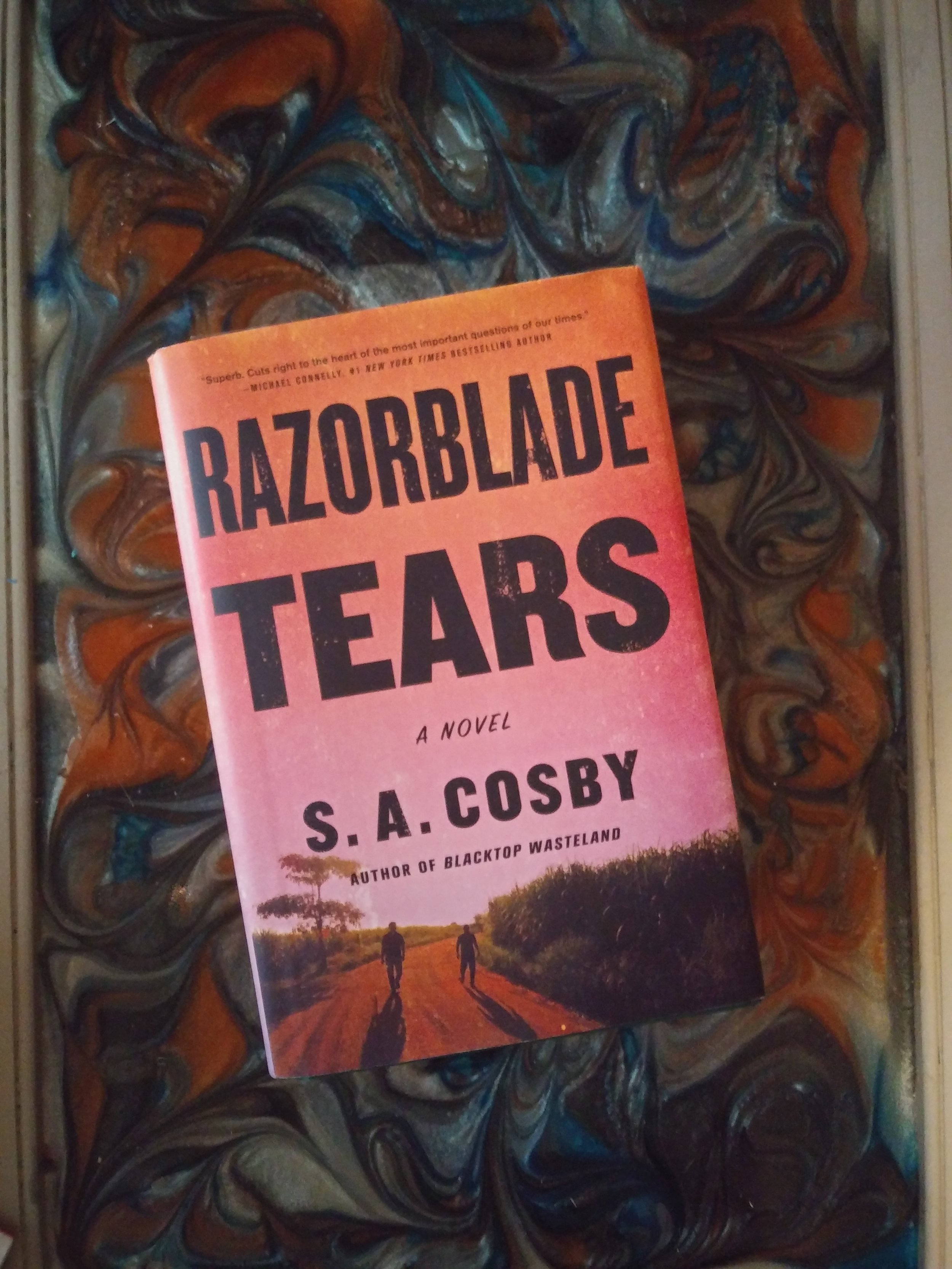
Review Under Two: Razorblade Tears by S.A. Cosby

Review Under Two is a segment of The Marinade with Jason Earle podcast where host Jason Earle reviews a work he finds inspiring in under two minutes.

Our Review Under Two for Episode 97 with singer-songwriter AHI focuses on the novel Razorblade Tears by S.A. Cosby.

So many of life’s important conversations are now reduced to shouting at the opposition. If only we all had S.A. Cosby filters to pass through our complicated thoughts, this might cease to be true. Put through the prism of Cosby’s able pen, the nuance of situations can exist and the big issues face reckoning. 

The characters in S.A. Cosby’s novel Razorblade Tears come to a place of understanding, but not by shouting about how they are right and others are wrong. They get to a place of compassion, remorse, and recognition by rolling up their sleeves and getting dirty. 

Ike , Buddy Lee, and the rest of the ensemble come to life through Cosby’s command of dialogue. The two fathers - Ike and Buddy Lee - are the stars of the show and they have a lot to say to each other. They are ostensible opposites who have a lot more in common that they realize at the outset of the story. Ike is a black man. Buddy Lee is white. Ike runs a successful business. Buddy Lee is barely holding whatever he has left together.

We get to know them through trips to bars and flower shops. Through long drives and mornings at the breakfast table- none of which are particularly conventional given the circumstances of these otherwise pleasant settings. They get to know each other by talking about the gravity of the situation in which they find themselves and the consequences of their actions.

Despite their differences, the two men share a quest for vengeance stemming from the brutal murder of their sons, who were a married couple. Neither father was very good at their jobs while the boys were alive - which is both a function of their own prejudice and the fact that each man found himself in trouble with the law for violent reasons. They are united by a desire to do right this time- to find out who killed their boys and why.

While the fathers dominate the story, every character is treated as a crucial piece of the puzzle. We learn about their insecurities, their strengths. We get to understand their motivations. 

Ike and Buddy Lee develop into heroes but the line between hero and villain in this crime thriller remains thin until the end.

The demarcation happens as a result of the choices each character makes. Cosby’s villains are evil not only because they are bigots, but because they are bigots who are unwilling to change. 

Ike and Buddy Lee harbored some hate of their own. What sets them apart from the truly nefarious characters in this book is their willingness - albeit a stubborn one - to self-examine. These are guys who could be dismissed as total ass holes on the surface. A pair of ex cons, both homophobes when we meet them. But, forced into action by a system that has left them behind, the two men become friends who help transform each other. It is in these moments that their humanity shines, even as they are committing unspeakable acts.

In Razorblade Tears, there is a hope that people can change. There is an opportunity for redemption, even for middle aged folks who have had life knock them down with its best combinations. S.A. Cosby delivers a knockout punch like one of his protagonists with this novel.